Fairport Beach Lock & Key SpecialistsService bulletin 1 of 3
Lock Rekeying: step by step
Moving into a home is the moment most people first hear about rekeying, and it is the most sensible time to do it.
Pickering, Ontario · Locksmith · open 24/7
Moving into a home is the moment most people first hear about rekeying, and it is the most sensible time to do it. A resale house has usually passed through owners, real estate agents, home inspectors, cleaners and trades, each of whom may have held a key at some point. Rekeying every exterior cylinder on move-in day means the only keys that work are the ones cut for you, and the same visit is a chance to put every door on one key so the coffee tin of mystery keys can go in the recycling.
Smart locks and user-rekeyable cylinders
Modern hardware gets its own look. Many keypad or app-controlled deadbolts have a conventional override cylinder behind a cover that can be rekeyed to the house key so the backup key is not a stranger on your ring, though some models are key-free and use an external battery backup instead. Some residential cylinders are designed to be reset by the owner with a small tool and a working key; the locksmith checks whether one has been reset correctly and whether it accepts the new key. Where a smart lock is being kept, codes are reviewed at the same time so a departed keyholder's code goes the way of their key.
Cutting the new key and gauging the depths
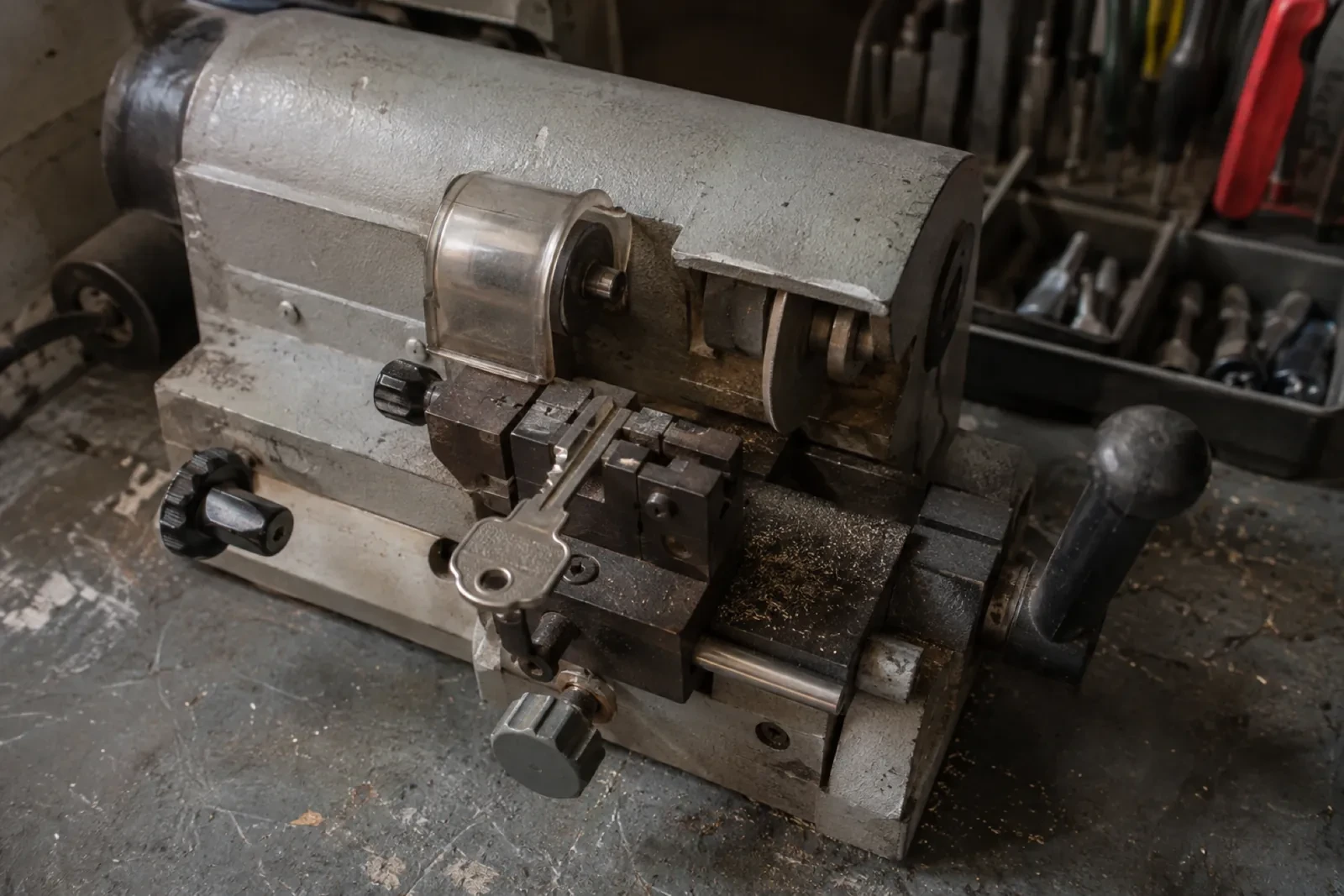
On this cylinder type, the new key comes first, then the pins to match it. The locksmith cuts a fresh key from a blank on a code cutter or duplicator, choosing a combination that is not close to the old one, and reads each cut with a key gauge to find its depth on the manufacturer's scale. Bottom pins of the matching lengths are picked from a graded pin kit and dropped into the plug chamber by chamber, so that when the new key is inserted every pin top sits exactly at the shear line. A key cut from a clean blank and pins matched to it by gauge is what gives a rekeyed lock that crisp, new feel.
For landlords: the tenant's copies and the paperwork
After a rental unit is rekeyed, the incoming tenant receives their keys, the landlord keeps a copy as the tenancy rules expect, and the number issued is written on the move-in record so the count at move-out is easy to check. The former tenant's keys are retired. Where a building has several suites, the locksmith can keep each on its own key while the shared entry stays on a common one, and the note of which key belongs to which door becomes the start of a keying chart. That chart is what makes the next turnover a matter of one cylinder rather than a guessing game about who has what.